adhd study methods that hold when focus won't
"sit down and study for two hours" is advice written for a brain that can decide to be interested. yours negotiates. twenty minutes into the wrong setup you have read one page and reorganized a drawer, and the session ends in the usual verdict about your character.
drop the verdict. studying with adhd is an engineering problem: attention there is real and deep - it arrives under specific conditions, and conditions can be built. every method below is a condition, not a virtue.
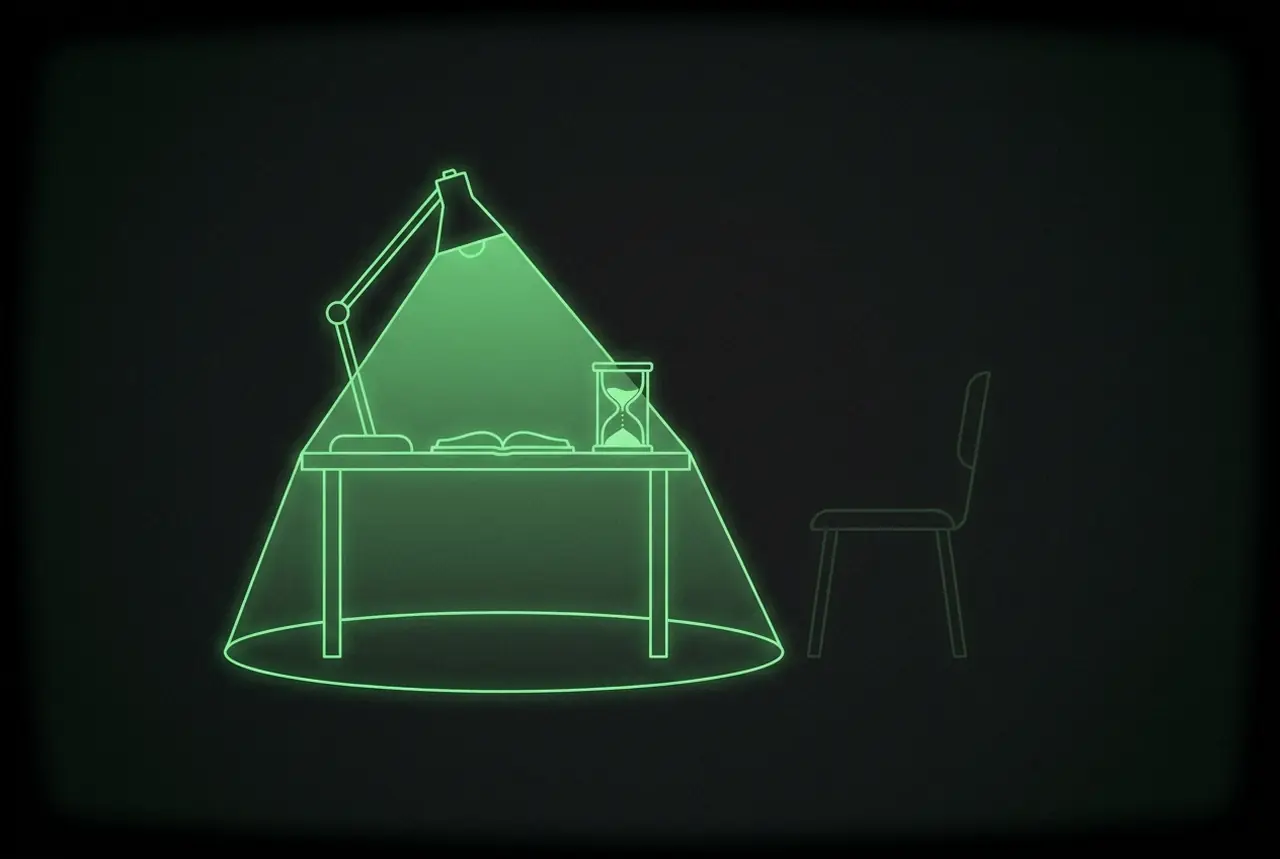
engineer the session, not the willpower
- sprints, not sittings. 20-25 minutes on, 5 off, alarm-driven. the sprint shrinks "study all evening" - a wall - into "survive one lap", and the break is scheduled before the burnout, not after. three laps beat one heroic collapsed hour, every time.
- body doubling. study beside another person: a friend, a library table, a video focus room. their quiet presence converts "i should start" into "we are working." it feels too small to matter; it is the most reliable lever on this list, and it costs nothing.
- strip the exits. phone in another room - not face down, gone. one tab. the material already open before the sprint starts, because every step between you and the first word is a place to leak. on low days the path of least resistance wins, so aim the path at the book.
- let the body run. pace while reciting, gesture while explaining, chew gum, use a standing desk. stillness costs your brain effort it should be spending on the material; treat movement as a co-processor and let it run.
make the material fight back
passive reading is where adhd study sessions go to die: the eyes move, nothing lands, an hour disappears. interest can be manufactured by making the material interactive:
- questions first. before reading, write three questions the pages should answer. reading becomes a search - a task with a target - instead of a slow scroll.
- teach-back. after each sprint, explain what you read out loud to nobody, from memory, in your own words. where the explanation stalls is exactly where understanding is missing; that stall is the day's most useful data.
- turn notes into cards. end each sprint by converting the sprint's material into two or three question-answer flashcards. writing the question is half the learning; the cards become the exam-week machine below.
the pattern across all three: output beats input. a brain that struggles to absorb passively will still fire for a challenge, and every one of these turns absorbing into producing.
the forgetting problem
adhd forgetting is steep decay that needs external scheduling, because "i'll review this weekend" is a waiting plan and waiting plans lose. put reviews in the calendar with alarms: one day after learning, three days, a week. ten minutes per review, cards only. spaced repetition is old advice because it works; the adhd edit is that the spacing must be machine-enforced, the same interrupt rule that runs the rest of the system.
exam week, the protocol
your hour
- write three questions your next chapter should answer
- set up the sprint: phone in the other room, timer on 25, material open
- run one sprint tonight and close it with a teach-back out loud
- put two review slots in the calendar with alarms before you stop
faq
how do i study when i can't focus at all?
shrink until starting is trivial: one 10-minute sprint, one question to answer, phone gone. focus follows starting far more often than it precedes it - build the ramp, not the resolve.
what is the best study method for adhd?
short alarmed sprints, body doubling, and output-based work: questions-first reading, teach-back, flashcards. engineered conditions over summoned discipline, every time.
do these methods work for adults studying for work?
yes - certifications, new skills, side-project learning: the wiring is the same, so the levers are the same. sprints and teach-back carry professional material just as well.
more in the notes.