how to create software without being a programmer
the sentence "i can't code" used to end the conversation. in 2026 it barely starts one: describing software clearly is now the skill, and machines handle the syntax.
that does not make building trivial. it moves the difficulty - from writing code to knowing what you want, saying it precisely, and checking what comes back. those three you can learn in a week of evenings, and this post is the map.

what changed
ai coding agents now take a plain-english goal, write the code, run it, hit errors, and fix them - the loop a junior developer runs, at machine speed. the practical meaning: software went from "learn a language for two years" to "describe, run, correct, repeat." proof of the claim, in the open: this site was built from an empty folder by an agent, owner watching, not typing.
pick your lane
two lanes, chosen by what you are building:
- no-code builders - visual tools that assemble apps from blocks (forms, databases, dashboards). fastest when your need matches their patterns: an internal tracker, a booking form, a simple customer portal. the ceiling arrives the day your need stops matching the blocks, and the app lives on their platform, on their pricing.
- ai coding agents - claude code and its kin write real code you own: any behavior, any integration, hosted where you choose. the floor is higher (a repo, a deploy step - the agent walks you through both), the ceiling is gone, and the result is an asset on your ground, not a subscription's tenant.
the lean: a throwaway internal tool, take no-code and be done in an hour. anything you might still want in a year - a product, a public site, a tool with your data in it - take the agent lane and own the result.
the build loop
the whole method fits in four moves, repeated:
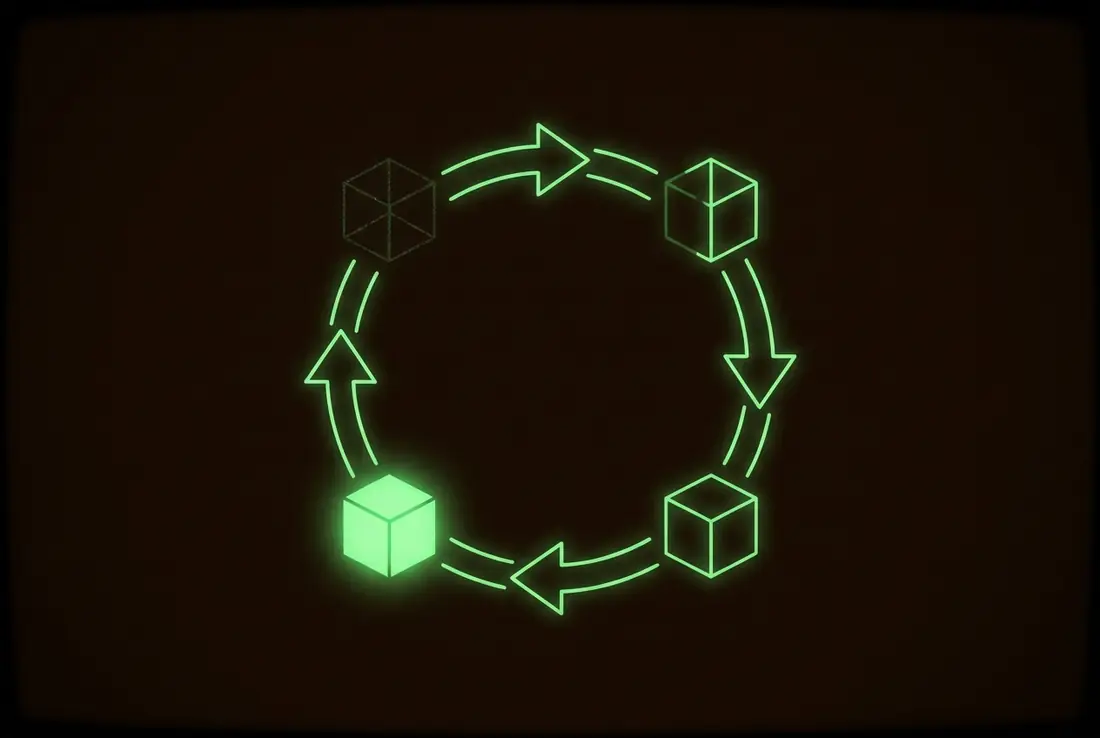
worked example: one real tool, start to finish
the task: a quote calculator for a cleaning business - rooms and extras in, price out, emailed to the customer.
the first prompt, in full: "build a one-page quote calculator for a home cleaning service. inputs: number of rooms, bathrooms, checkboxes for oven and windows. price: $40 per room, $25 per bathroom, oven $30, windows $5 each. show the total live. a submit button asks for the customer's email and sends them the quote. plain design, mobile first."
that paragraph is the program. the agent scaffolds the page, wires the math, stubs the email step and asks which email service to connect - a real decision, so it should ask. first test finds the windows price applied per checkbox instead of per window; the correction is one sentence; loop two fixes it. an evening in, the tool is live on a $3-a-month host - the same hosting decision any site needs.
total code typed by the owner: none. total decisions made by the owner: all of them.

where it breaks, said straight
- vague in, confident nonsense out. the agent cannot read your mind, and it will not stall while it guesses. the fix is shrinking the ask until it is checkable.
- you can't evaluate what you can't test. if "working" has no observable definition, you will ship bugs politely. define the check before the build.
- maintenance is real. software you own needs updating, like anything you own. the agent does the updating too - but only when asked, so put a monthly note in the calendar.
- security deserves one adult pass. before anything public takes real user data, tell the agent: "review this for security problems and fix them." then ask what it changed and why - the answer is your education, compounding.
your hour
- write the one-paragraph description of a tool your week needs: who, does what, "working" means what
- pick the lane: no-code if it fits a pattern and can die in a year, agent if it should live
- run loop one tonight - reach something testable before you sleep
- book the second evening now; loop two is where it starts feeling inevitable
faq
can i create software without knowing how to code?
yes. ai coding agents write, run, and fix real code from plain-language instructions; your work is describing precisely and testing what comes back.
what's the best way to make software with no experience?
match the tool to the ambition: no-code builders for pattern-shaped internal tools, an ai coding agent like claude code for anything custom you want to own. either way, work in small described-and-tested loops.
how much does it cost to build your own software?
the agent lane runs on an ai subscription plus a few dollars of hosting a month. the expensive part was always the programmer; that line item is what collapsed.
more in the notes.